A Completely Normal Amount Of Research Into Fleece
Fleece bedding would be the easiest part of guinea pig parenting, we thought. We knew it was important to get bedding that stays nice and dry to keep piggie feet healthy, and we were pretty sure we wanted to stick with fleece because it could fit our design style nicely and be less wasteful than disposable bedding. All that said, we had no idea that it would be pretty much impossible to find fleece bedding we like the look of. GuineaDad’s liners came close, but the colors just weren’t quite right for our setting. Most everything else was garish, cartoony, and not designed to be on display in an elevated modern room. No problem, we thought. One of us has a sewing machine - we’ll just sew our own! A quick look through all of the available fleece left us a bit discouraged. Almost none were elegant or refined colors. JoAnn Fabrics went out of business, so even finding a local place to go look at fleece was a no-go.
And then we found Spoonflower, and we felt like the stars had aligned! You mean we can print polar fleece in any design of our choosing? Sign us up! And before you click away to go buy Spoonflower fleece, spoiler alert: Spoonflower fleece does not wick. To be fair, the fabric description on Spoonflower doesn’t state that it wicks. But we naively assumed that all fleece wicks, and AI assured us that polar fleece in particular is excellent for wicking. Really, go ask AI for yourself if Spoonflower’s polar fleece is a good choice for pet bedding that has to wick, and it will assure you with great confidence that it is. But as we’re all beginning to learn, asking AI things is not the same as real research and is bound to get you false answers.
As a quick aside - what is wicking, one might ask? In terms of fleece bedding, wicking is the ability of a top layer material to move water (or pee) from the top of the fabric through to the other side. It works via capillary action, the moisture gets drawn in and spread through the fibers where it can either be absorbed by what is under it or evaporate. This process is essential in guinea pig bedding because it is what keeps the top layer of the bedding dry even if a piggie pees on it. In terms of bedding, the goal is for the moisture to be drawn through and then sucked into a thirsty absorbent layer right under it, keeping the fleece itself nice and dry, and your piggies’ feet free from bumblefoot.
Back to the saga. Our belief (and AI’s reassurance) that all fleece wicks is how we ended up with many beautiful yards of Spoonflower fleece. Right away, we tested it for wicking (basically just putting some water on it and seeing whether it pools or soaks in). It did not wick, but we weren’t terribly worried - we had read that a lot of fleece requires several washes to get rid of manufacturing residues and begin wicking. So we washed it per manufacturer instructions 10 times, hoping each time it would magically start wicking. It did not. We poked around online, looking for help or ideas, and we ended up trying an enormous amount of things, each separately on different samples, so as to not get accumulated effects from other things we’d tried. We washed it with vinegar - no change there, just a vinegar smell after washing. We tried citric acid. Smelled nice, but no wicking. We washed it on a hot cycle 10 times in a row. Absolutely no change, the water was still happily pooling on top of the fabric. We tried stripping it in our bathtub for 10 hours with oxiclean and Tide. No change. We tried a lot of different detergent options, still nada. We even tried reading material science studies on how fleece is created and how it works, which was interesting, but did not solve our particular problem. At one point, we got super excited because on a whim we sprayed a section of it with isopropyl alcohol which was the only thing in our cabinet we hadn’t tried on it yet, and incredibly the fabric wicked! And then we washed it, and then we were right back at square one with zero wicking.
This discovery led us to start thinking the problem might be due to something used in the Spoonflower printing process. We looked into how Spoonflower does their printing. They use a process called sublimation printing where the ink is printed onto a special type of paper and then is transferred using heat and gas to permanently bond it into the fabric fibers. Perhaps something in the printing process is altering the fibers? We reached out to Spoonflower, and they responded with really well-intentioned and helpful customer service, but ultimately they seemed just as baffled as we were, and we all eventually agreed that for whatever reason, their fleece was not ever going to wick. It must be said, we really appreciated Spoonflower’s willingness to help and their honesty about all of it, and we’ll be happily ordering other fabrics from them for other parts of our habitat.
So it was back to the drawing board. While doing other research for how to sew the best waterproof liners, we bumped into a company called Wazoodle that makes a fabric called Zorb, to be used as an absorbent layer, ideally what a wicking fabric would wick liquid into. Since we were pretty sure we’d be ordering some Zorb, we poked around and saw that they also sell a product called ProCool® Dri-QWick™ Sports Fleece. The color choices were not really to our liking, but we decided to order a couple of yards of the variety with silver, which acts as an antimicrobial agent that can help to minimize odors. And wick it did! The difference between that and the Spoonflower fleece was dramatic, and although we don’t love most of their colors, we did end up making sets of mats in their white, charcoal, and stone (which is more of a blue-gray). We can’t recommend that fleece highly enough for its wicking properties!
So for now, we have learned our lesson to always buy swatches first, and to never assume that all fabrics of a certain type will have the same function. We’re sure the fleece quest isn’t over, but we’re glad to have a pleasing enough and functional solution in place until then.
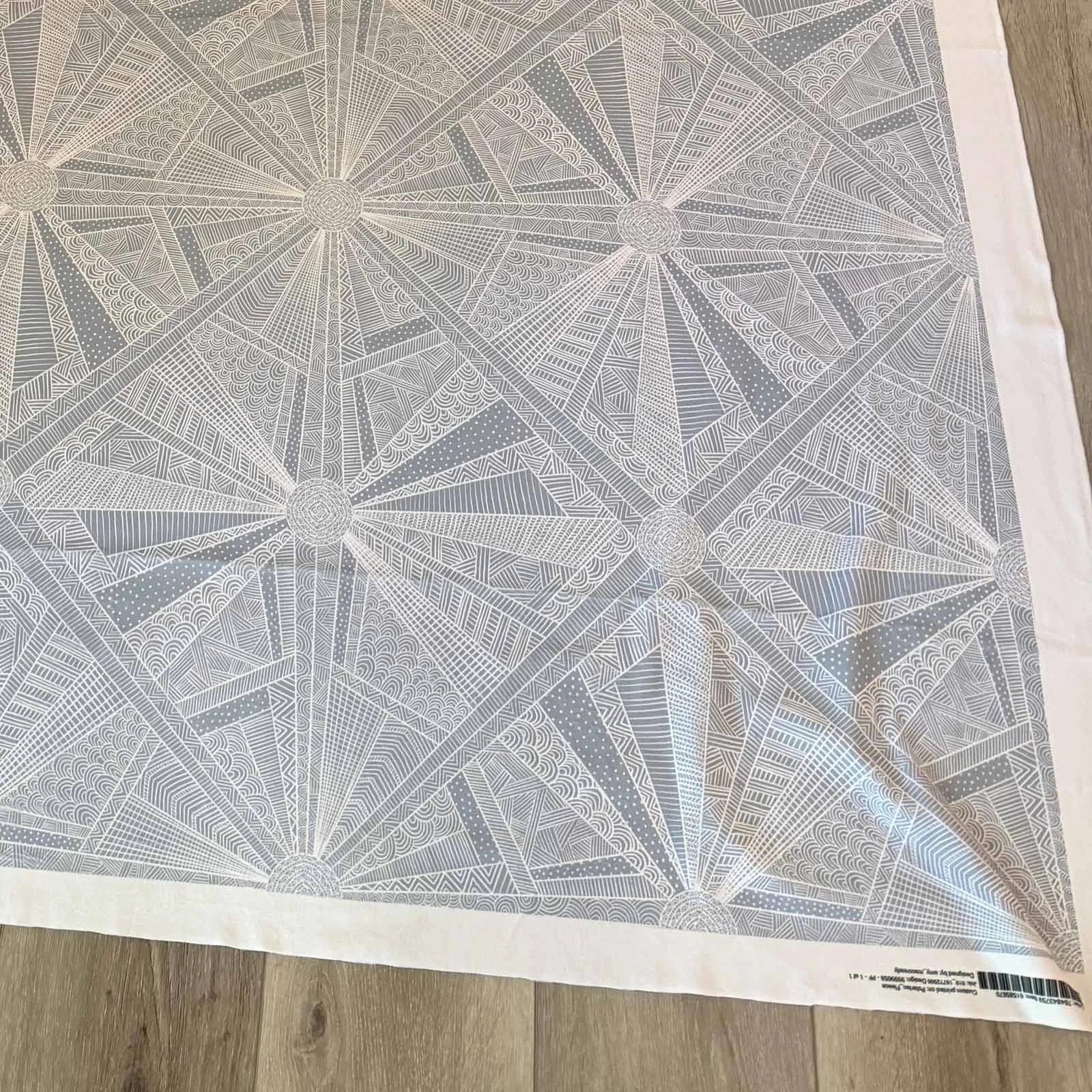
Some of the lovely Spoonflower fleece we ordered and sadly could not use
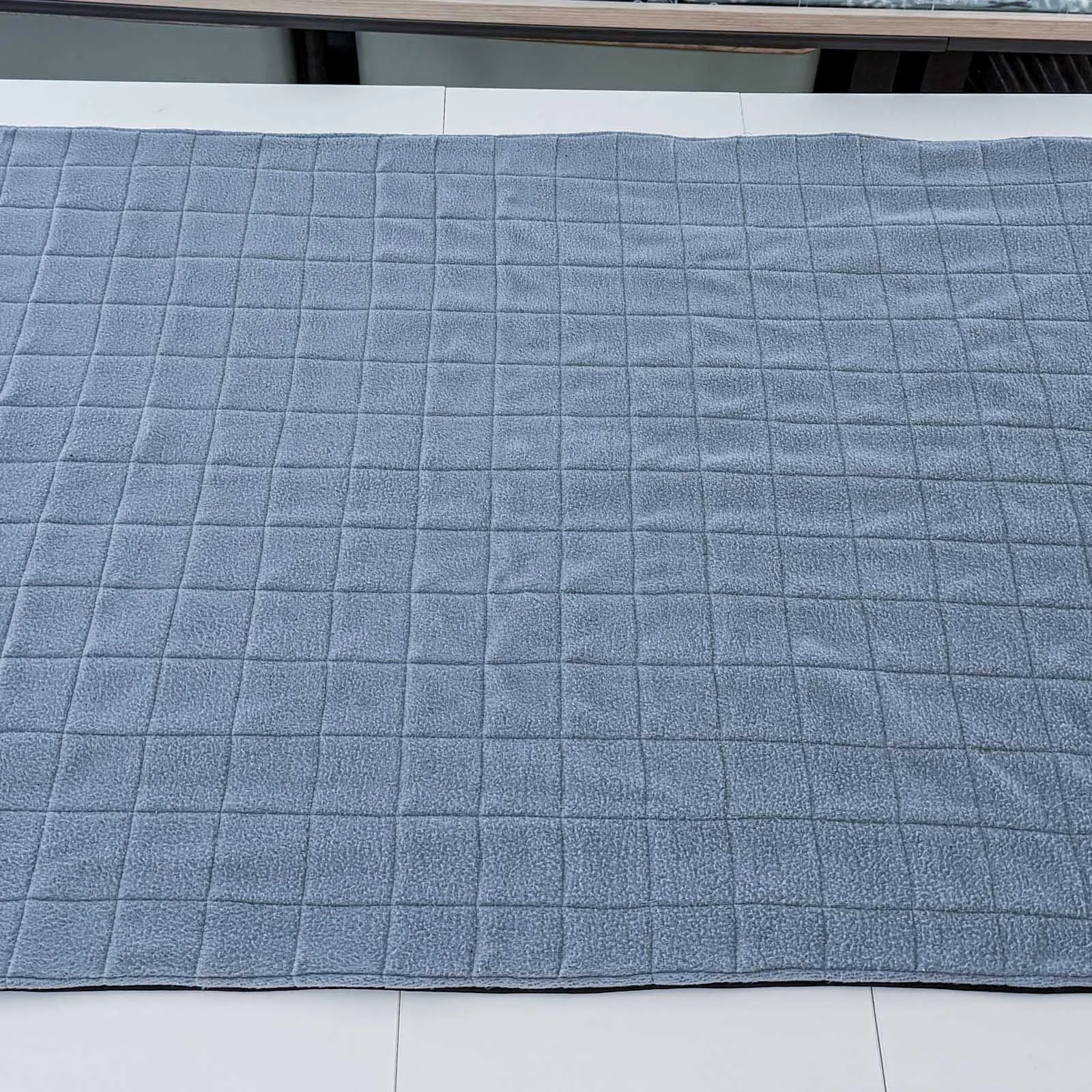
A mat we made from Wazoodle fleece